Daniel Arsham’s Dubai café exploring the space between gallery and gathering place
A gallery asks you to look. A café asks you to sit down. We got curious about what happens when one space tries to do both, and that curiosity led straight to Daniel’s Room.
Daniel’s Room caught our attention because it approaches hospitality differently. It takes something familiar, a coffee shop, and places it within the context of an artist’s wider creative practice. The result is a space that sits somewhere between a café, a showroom, and a physical expression of Daniel Arsham’s aesthetic.
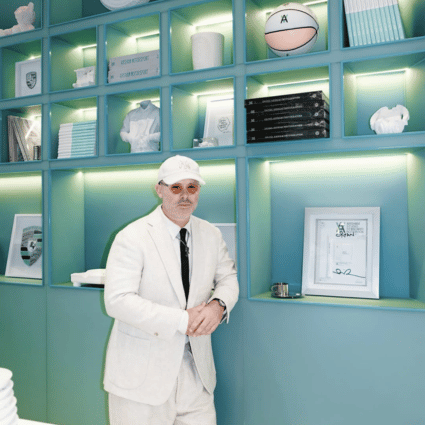
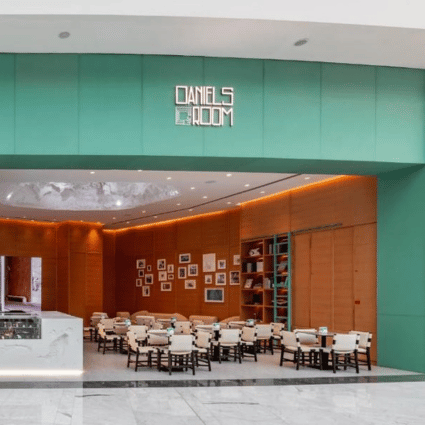
Daniel Arsham, Dubai Mall. Photo: Daniel’s Room
The Space
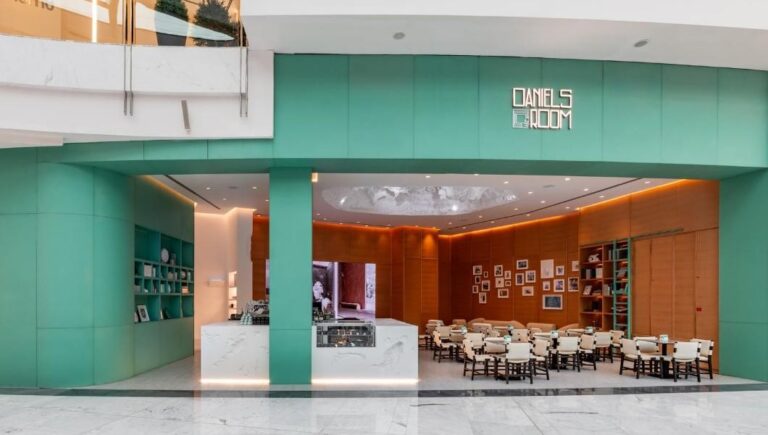
Located in Fashion Avenue at Dubai Mall, Daniel’s Room is the first hospitality concept by contemporary artist Daniel Arsham. The café brings together coffee, desserts, and light dining. Everything around it, the sculptural furniture, the custom objects, the finishes, carries the same material language as Arsham’s sculpture and design work, built on his interest in time, memory, and imagined futures.
Rather than functioning as a branded café, Daniel’s Room feels closer to a curated environment, one where the objects, materials, and surroundings are designed to work together as a single experience.
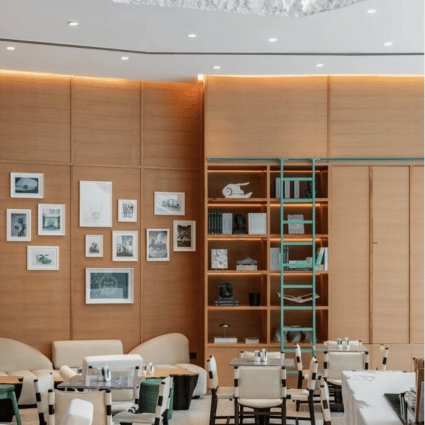
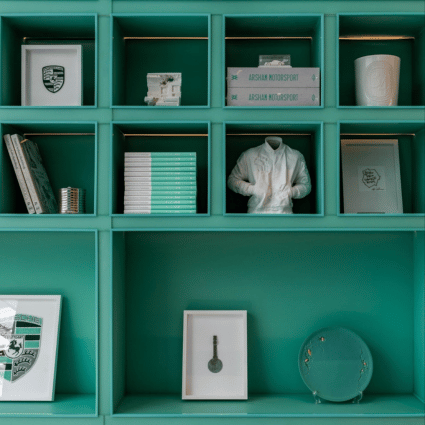
Interior detail, Daniel’s Room. Photo: Daniel’s Room
What It Does
The interesting question behind Daniel’s Room is what happens when an artist’s perspective moves from something to be viewed into something to be lived with.
A gallery asks visitors to observe. Hospitality asks them to stay.
The space brings those two ideas together by placing artistic consideration into everyday moments: sitting down for coffee, interacting with objects, noticing materials, and spending time within the environment.
For hospitality design, this creates a different challenge. The goal is no longer just to create a visually recognisable venue, but to build a space that remains engaging beyond the first impression.

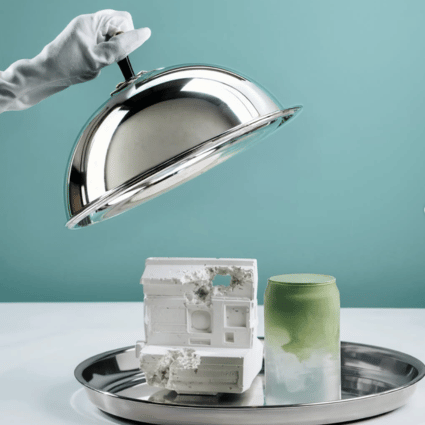
Daniel’s Room, Dubai Mall. Photo: Daniel’s Room
A Catalyst Pick
What makes it interesting is the commitment to a singular point of view. Every element, from the furniture to the smallest details, supports the same direction, creating a space that feels intentional rather than assembled.
At Catalyst Spaces, we look at environments through the relationship between concept and execution. The strongest spaces are not defined by individual features, but by how every choice contributes to the overall experience.
Daniel’s Room is an example of how a familiar setting can become something more considered when design is treated as the foundation, not the finishing touch.